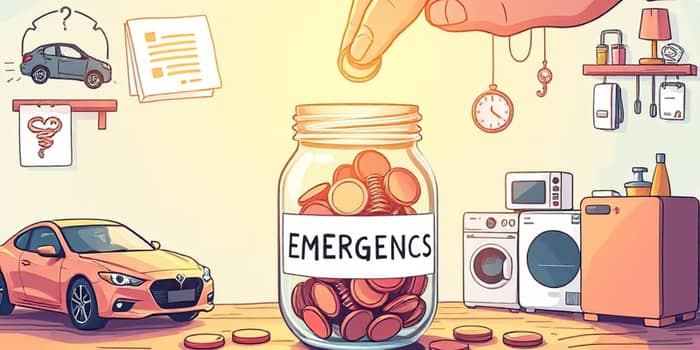
Building an emergency fund is one of the most powerful steps you can take toward financial resilience. In this article, you will learn why setting aside money for life’s surprises matters, how much to save, and practical steps to reach your goals.
When unexpected expenses strike, a solid emergency fund can be the difference between facing hardship and staying on track.
Understanding the Emergency Fund
An emergency fund is a dedicated savings account set aside specifically for unplanned costs. Often called a "rainy day fund," it ensures you have access to cash when life throws curveballs. Its sole purpose is to protect against genuine emergencies, not routine bills or discretionary spending.
By treating this fund as untouchable except in true crises, you reinforce your financial discipline and safeguard long-term goals.
What Qualifies as a True Emergency?
Knowing what to use your emergency fund for is crucial. Only allocate these savings to situations that genuinely threaten your financial stability.
- Unforeseen medical expenses such as hospital bills or urgent procedures
- Major car repairs or replacements after an accident
- Home-appliance repair or replacement (e.g., refrigerator, heating system)
- Job loss or sudden reduction in income
- Urgent travel for family crises
- Unexpected home repairs like roof leaks or plumbing failures
Reserving funds for these scenarios ensures you avoid costly debt and high-interest credit options.
Why You Need an Emergency Fund
The benefits extend far beyond covering unexpected costs. With an emergency fund, you:
- Maintain a financial buffer during unexpected events without debt
- Avoid reliance on high-interest credit cards or loans
- Protect retirement savings and investments from premature withdrawals
- Reduce stress and anxiety over future uncertainties
- Allow yourself time to recover after job loss or medical leave
Without this safety net, even a moderate expense can cause long-term financial setbacks.
Determining Your Savings Goal
The general guideline is to save three to six months of living expenses, though individual circumstances can vary:
- Three to six months of living expenses is the standard recommendation for most households.
- Those with no dependents or a steady job might aim for three months.
- Families, freelancers, or individuals with irregular income should target six to nine months or more.
To calculate your goal, list fixed costs (rent or mortgage, utilities, insurance, loan payments) and variable costs (groceries, transportation, healthcare, entertainment). Multiply the total by the number of months you wish to cover.
For example, if your monthly expenses are $3,800, a six-month fund would be $22,800.
Where to Keep Your Emergency Fund
Accessibility and safety are paramount. Your emergency fund should be kept in a high-yield savings account recommended for safety. Look for:
- Federally insured institutions (FDIC or NCUA) to safeguard up to $250,000 per depositor
- Competitive interest rates to help your balance grow over time
- Easy access for withdrawals when emergencies occur
Avoid investing these funds in volatile assets like stocks or long-term bonds. Liquidity matters most.
Expert Recommendations and Statistics
Leading financial experts agree on the three-to-six-month rule, but opinions vary based on personal circumstances:
Despite these clear guidelines, many struggle to save enough:
• Only 46% of Americans have three months’ expenses saved, and just 27% have six months or more.
• 24% have no emergency savings at all, and 56% cannot cover a $1,000 surprise expense.
Building Your Fund: Practical Tips
Consistency and automation are key to success. Follow these steps:
- Start small with achievable milestones—begin with $500 or $1,000.
- Automate regular deposits every pay period to avoid manual transfers.
- Track spending and adjust your budget to free up savings.
- Reduce non-essential expenses and curb impulse buys.
- Use windfalls—tax refunds, bonuses, gifts—to boost your balance.
Even saving $20 a week adds up to over $1,000 a year, demonstrating the power of small, consistent actions.
Overcoming Common Misconceptions
Many people confuse emergency funds with general savings or dip into them for non-essentials. Remember:
• Your emergency fund is not for vacations, gadgets, or daily expenses.
• Keep this fund separate from retirement accounts, sinking funds, or investment portfolios.
• Insurance covers many risks, but an emergency fund addresses gaps and deductibles.
Beyond Money: The Emotional Payoff
An emergency fund brings reduced financial stress and anxiety, enabling you to face life’s surprises with confidence. When your fund is well-stocked, you experience:
• Peace of mind knowing you have resources for urgent needs.
• Freedom to make career or health decisions without panic.
• Greater overall financial wellness and long-term planning clarity.
What Happens Without a Safety Net?
Without an emergency fund, most turn to high-interest credit cards or loans, risking debt traps and mounting interest charges. This leads to increased stress, potential damage to credit scores, and a longer recovery period after setbacks.
Conclusion
Establishing and maintaining an emergency fund is a cornerstone of sound financial planning. By setting clear goals, automating savings, and trusting the process, you can build a resilient financial safety net that protects you and your loved ones from the unexpected. Start today, no matter how small the steps, and watch your confidence—and your balance—grow over time.
References
- https://www.nerdwallet.com/banking/learn/emergency-fund-why-it-matters
- https://www.bankrate.com/banking/savings/emergency-savings-report/
- https://www.northshorebank.com/about-us/connecting-with-you/budgeting/pros-and-cons-of-having-an-emergency-fund
- https://www.nerdwallet.com/banking/learn/emergency-fund-calculator
- https://dfi.wa.gov/financial-education/information/importance-having-emergency-savings-account
- https://www.tiaa.org/public/learn/financial-education/building-an-emergency-fund
- https://investor.vanguard.com/investor-resources-education/emergency-fund
- https://www.fidelity.com/viewpoints/personal-finance/save-for-an-emergency
- https://www.johnhancock.com/ideas-insights/why-do-i-need-an-emergency-fund.html
- https://www.53.com/content/fifth-third/en/personal-banking/planning/financial-calculators/emergency-fund-calculator.html
- https://www.fidelity.com/learning-center/smart-money/emergency-fund
- https://www.wellsfargo.com/financial-education/basic-finances/manage-money/cashflow-savings/emergencies/
- https://www.discover.com/online-banking/banking-topics/why-you-need-an-emergency-fund/
- https://www.usbank.com/financialiq/manage-your-household/personal-finance/how-to-build-emergency-fund.html
- https://www.1stunitedcu.org/more-for-you/financial-wellness/four-reasons-emergency-funds-are-important