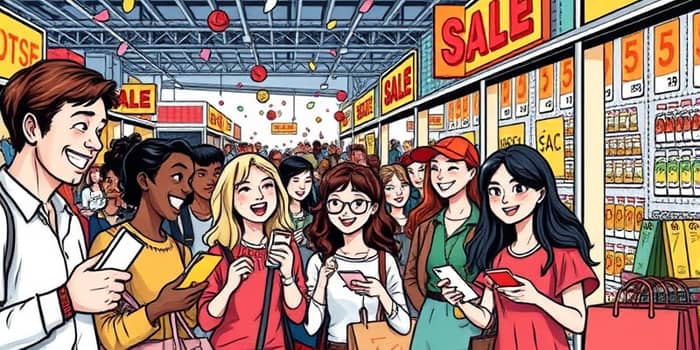
From Black Friday frenzy to online flash sales, the allure of a bargain is deeply rooted in psychology. Beyond the numbers, discounts tap into our instincts, emotions, and social tendencies. By understanding the science behind price reductions, shoppers can transform impulse buys into strategic purchases and retailers can craft offers that resonate.
Understanding the Power of Discounts
Discounts are much more than simple markdowns. They shape perception, create urgency, and elevate a product’s value in the consumer’s mind. When a price is slashed, shoppers perceive the new amount against an anchor of the higher original price, making every deal feel like a victory.
Retailers leverage this by prominently displaying original prices next to sale prices, harnessing the anchoring effect to drive conversions. This strategic presentation convinces buyers they’ve found an exceptional opportunity, even when the reduction is modest.
Psychological Mechanisms Behind Discounts
The impact of a discount goes beyond savings. Our brains react to deals through a network of cognitive biases and emotional triggers, nudging us toward the checkout button.
Framing influences our perception: presenting a markdown as 20% off appeals more for luxury items, while a $5 reduction feels concrete for everyday essentials. This precision in framing discount offers ensures value is understood correctly by different customer segments.
Scarcity and urgency skyrocket conversion rates. Limited-time flash sales and countdown timers unleash anticipatory regret and FOMO, compelling shoppers to act quickly. This emotional pressure overrides deliberation, fueling impulse purchases.
Social proof also shapes buying behavior. When we see glowing reviews or a product rapidly selling out, the bandwagon effect boosts perceived value. Shared enthusiasm from other shoppers builds trust and motivates us to join the crowd.
Discount Formats and Their Impact
Choosing the right discount format is an art. Whether it’s a percentage-off or dollar-off reduction, each format plays to different consumer instincts.
Bundling simplifies choices and boosts satisfaction, while debundling can highlight savings on everyday essentials, increasing repurchase likelihood by 10%. Hedonic discounts on pleasure items cut guilt by 15%, making indulgent purchases feel justified.
Consumer Behavior and Decision-Making
Impulsive buying is driven by System 1 thinking—quick, automatic, and emotion-led. Shoppers exposed to flash sales and glowing reviews react on instinct, not deliberation. Understanding this can help consumers pause and reflect before clicking "buy."
Behavioral segmentation further refines targeting. Some customers only respond when discounts exceed a threshold, while others chase the thrill of early-bird specials. Tracking browsing and purchase history reveals these patterns, enabling personalized offers.
Price endings also wield subtle influence. Prices ending in .99 or .9 often outperform rounded figures, even when savings are identical. This small tweak can elevate conversion rates during promotions.
Potential Downsides of Discounts
Deep discounts carry risks. Excessive markdowns may signal inferior quality, prompting critical feedback from buyers who expect premium performance at a bargain price. In some markets, frequent sales erode brand prestige and make customers wary of paying full price.
Customers who purchased at full price often feel cheated when the same product sells at a steep discount days later. This sentiment can damage trust and loyalty, emphasizing the need for transparent and predictable pricing strategies.
Practical Tips for Smart Shopping
Armed with knowledge of discount psychology, shoppers can make smarter decisions and avoid buyer’s remorse.
- Compare anchored prices to assess true value before buying.
- Choose percentage discounts for high-ticket items; use dollar-offs on essentials.
- Evaluate bundled offers carefully; sometimes separate purchases yield better savings.
- Recognize emotional triggers like limited-time deals and social proof.
- Check reviews and ratings to avoid low-quality purchases.
- Look for prices ending in 9 or .99 to maximize perceived value.
Conclusion: The Science of Smart Shopping
Discounts are not merely tools for saving money—they unlock a complex interplay of psychology, emotion, and social influence. By decoding these hidden mechanisms, shoppers can avoid impulsive pitfalls and embrace intentional, value-driven decisions.
Retailers, in turn, can harness these insights to design authentic, meaningful promotions that maximize perceived value and loyalty. When both sides understand the science of discounts, the result is a win-win: shoppers enjoy real savings and satisfaction, and brands cultivate long-term relationships built on trust.
References
- https://cotinga.io/blog/the-psychology-of-discounts-understanding-consumer-behavior/
- https://nhsjs.com/2025/price-perception-and-repeated-buying-how-psychology-shapes-consumer-loyalty/
- https://www.volusion.com/blog/using-the-psychology-of-discounts-to-make-more-money/
- https://www.vetrinagroup.com/blog/Value-Payoff-Dilemma-The-Psychology-of-Discounts
- https://www.simon.ai/blog-posts/the-psychology-of-a-discount
- https://insidebe.com/articles/guide-to-discounting/
- https://som.yale.edu/story/2023/decoding-black-friday-shopping-behavior-impulse-buys-thoughtful-choices
- https://www.namesilo.com/blog/en/business-guides/the-psychology-behind-discounts-why-consumers-are-wired-to-buy
- https://tgndata.com/the-psychology-of-discounts-data-patterns-that-lift-conversion/
- https://www.netsuite.com/portal/resource/articles/ecommerce/psychological-pricing.shtml
- https://paylode.com/articles/psychology-of-discounts